How to Calculate Roof Pitch
How to Calculate Roof Pitch: A Complete Step by Step Guide for Homeowners
Whether you're planning a roof replacement, installing solar panels, choosing roofing materials, or simply curious about your home's structure, knowing how to calculate roof pitch is an essential skill. Roof pitch affects drainage, aesthetics, material choices, and even the structural load your home carries.
In this comprehensive guide, you'll learn everything you need to know about roof pitch from the basic formula to hands-on measuring methods, common pitch types, and practical applications.
What Is Roof Pitch?
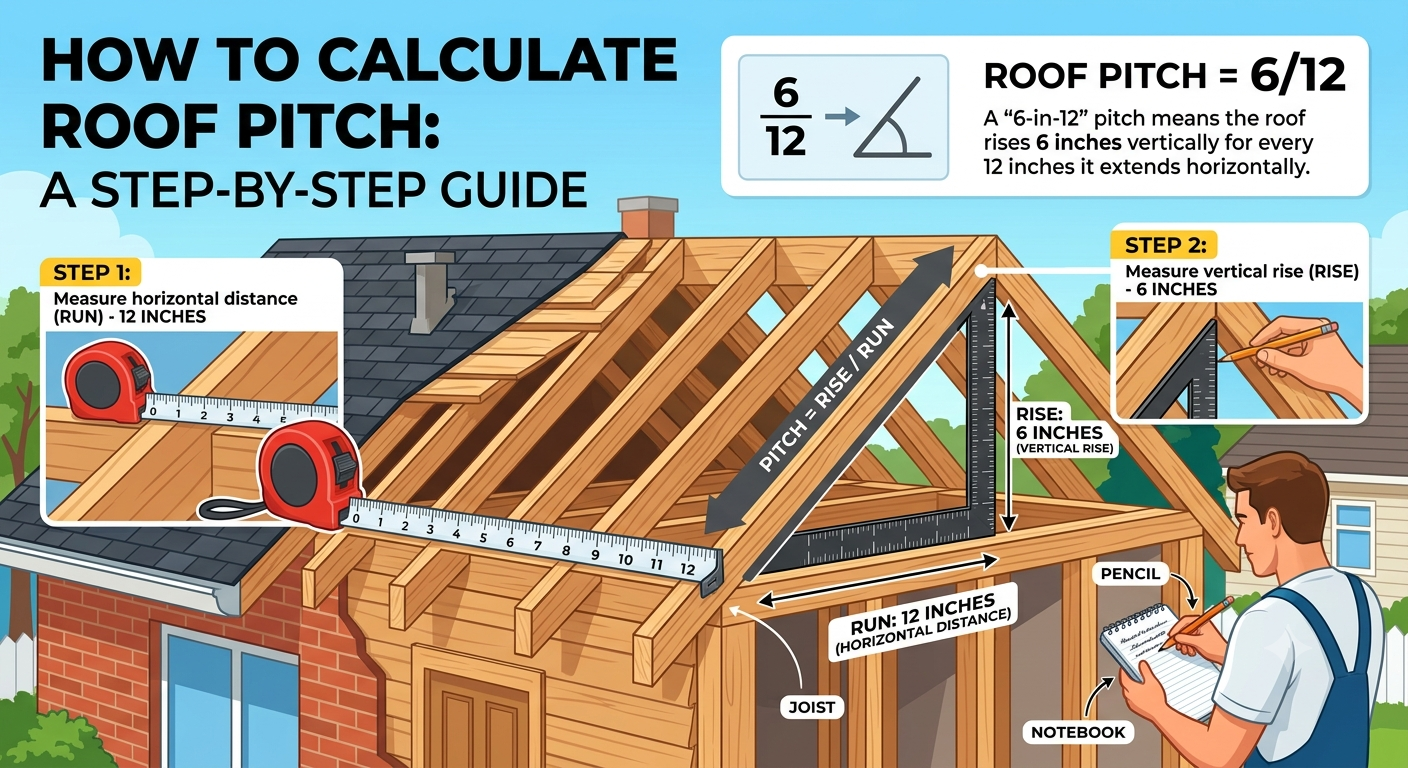
Roof pitch is the measurement of a roof's steepness or slope. It is expressed as a ratio of rise to run, written as X/12. This means for every 12 inches of horizontal distance (run), the roof rises a certain number of inches vertically (rise).
For example:
· A 4/12 pitch means the roof rises 4 inches for every 12 inches of horizontal run.
· A 12/12 pitch means the roof rises 12 inches for every 12 inches of run a 45-degree angle.
Understanding roof pitch helps you: ✅ Select the right roofing materials ✅ Calculate the amount of material needed ✅ Estimate drainage efficiency ✅ Determine snow and water load ✅ Plan safe roof access
Roof Pitch Formula
The basic roof pitch formula is:
Pitch = Rise ÷ Run
- What Is Roof Pitch?
- Roof Pitch Formula
- Tools You Need to Calculate Roof Pitch
- Method 1: How to Calculate Roof Pitch from the Ground (Attic Method)
- Step-by-Step Instructions:
- Method 2: How to Calculate Roof Pitch from the Roof Surface
- Step-by-Step Instructions:
- Method 3: How to Calculate Roof Pitch Using a Speed Square
- Step-by-Step Instructions:
- Method 4: How to Calculate Roof Pitch from Blueprints or Plans
- How to Convert Roof Pitch to Degrees
- Common Roof Pitch Categories
- �� Low Slope Roofs (1/12 to 3/12)
- �� Conventional Slope Roofs (4/12 to 9/12)
- �� Steep Slope Roofs (10/12 and above)
- Why Roof Pitch Matters
- 1. Roofing Material Selection
- 2. Water Drainage
- 3. Snow Load
- 4. Roof Area Calculation
- 5. Building Code Compliance
- How to Calculate Roof Area Using Pitch
- Roof Pitch Safety Tips
- When to Call a Professional
- Conclusion
Or expressed as a ratio:
Pitch = Rise : 12
Where:
· Rise = vertical height of the roof
· Run = horizontal distance from the wall to the ridge (half the span)
Tools You Need to Calculate Roof Pitch
Before you start measuring, gather these simple tools:
|
Tool |
Purpose |
|
Tape measure |
Measuring rise and run |
|
Level (24-inch) |
Finding a true horizontal line |
|
Speed square or framing square |
Quick pitch measurement |
|
Pencil and notepad |
Recording measurements |
|
Ladder |
Accessing the roof safely (optional) |
|
Smartphone with pitch app |
Digital measurement option |
Method 1: How to Calculate Roof Pitch from the Ground (Attic Method)
This is the safest and easiest method, and you don't even have to climb onto the roof.
Step-by-Step Instructions:
Step 1: Go into your attic and locate the roof rafters.
Step 2: Place your level horizontally against the underside of a rafter, with one end touching the rafter.
Step 3: Hold the level so that the bubble is centered (perfectly horizontal).
Step 4: From the point where the level touches the rafter, measure 12 inches horizontally along the level. Mark this point.
Step 5: From that 12-inch mark, measure vertically up to the underside of the rafter. This vertical measurement is your rise.
Step 6: Your roof pitch = Rise / 12
�� Example: If you measure 6 inches vertically at the 12-inch horizontal mark, your roof pitch is 6/12.
Method 2: How to Calculate Roof Pitch from the Roof Surface
If you can safely access your roof, this method gives a very accurate reading.
Step-by-Step Instructions:
Step 1: Climb safely onto the roof surface.
Step 2: Place your 24-inch level flat on the roof surface, pointing toward the ridge.
Step 3: Lift the lower end of the level until the bubble is centered.
Step 4: Measure the vertical distance from the bottom of the raised end of the level down to the roof surface. Use a tape measure for this.
Step 5: This measurement gives you the rise for every 24 inches. Divide by 2 to get the rise per 12 inches.
Step 6: Your roof pitch = (Rise ÷ 2) / 12
�� Example: If the gap is 8 inches over 24 inches, divide by 2 = 4 inches. Your roof pitch is 4/12.
Method 3: How to Calculate Roof Pitch Using a Speed Square
A speed square (or rafter square) has a built-in degree scale that makes it fast and simple.
Step-by-Step Instructions:
Step 1: Hold the speed square against the roof rafter or roof deck.
Step 2: Pivot the square until the bubble or plumb line is level.
Step 3: Read the number where the edge of the rafter intersects the degree scale.
Step 4: This gives you the pitch directly in degrees or as a ratio.
�� Tip: Most speed squares show both degree measurements and pitch ratios on the same tool.
Method 4: How to Calculate Roof Pitch from Blueprints or Plans
If you have access to architectural drawings or blueprints:
Step 1: Find the roof plan section in the drawings.
Step 2: Look for the pitch triangle symbol — a small right triangle showing the rise and run values.
Step 3: The pitch is written as Rise:Run (e.g., 6:12).
This is the fastest method but requires access to your home's original building plans.
How to Convert Roof Pitch to Degrees
Some applications, like solar panel installation or roofing software, require the roof pitch in degrees rather than a ratio.
Use this formula:
Degrees = arctan(Rise ÷ Run)
Or use the handy conversion table below:
|
Roof Pitch |
Degrees |
|
1/12 |
4.8° |
|
2/12 |
9.5° |
|
3/12 |
14.0° |
|
4/12 |
18.4° |
|
5/12 |
22.6° |
|
6/12 |
26.6° |
|
7/12 |
30.3° |
|
8/12 |
33.7° |
|
9/12 |
36.9° |
|
10/12 |
39.8° |
|
12/12 |
45.0° |
Common Roof Pitch Categories
Understanding where your roof pitch falls helps in planning:
�� Low Slope Roofs (1/12 to 3/12)
· Suitable for flat or nearly flat roofs
· Requires special waterproof membranes
· Common in commercial buildings
�� Conventional Slope Roofs (4/12 to 9/12)
· Most common residential pitch range
· Works with asphalt shingles, metal roofing, wood shakes
· Good drainage and walkability
�� Steep Slope Roofs (10/12 and above)
· Dramatic appearance, excellent drainage
· Harder to walk on — safety equipment required
· May increase material and labor costs
Why Roof Pitch Matters
1. Roofing Material Selection
Not every material works on every pitch. For example:
· Asphalt shingles typically require a minimum 2/12 pitch
· Metal roofing can go as low as 1/12 with proper sealing
· Clay and concrete tiles need at least a 4/12 pitch
2. Water Drainage
Steeper roofs drain water faster, reducing the risk of leaks and moisture damage. Low-slope roofs require better waterproofing systems.
3. Snow Load
In snowy climates, a steeper pitch (6/12 or higher) helps snow slide off naturally, reducing structural load.
4. Roof Area Calculation
Knowing the pitch helps you calculate the actual roof surface area, which is critical for ordering the correct amount of materials.
5. Building Code Compliance
Many local building codes specify minimum or maximum pitch requirements depending on location and materials used.
How to Calculate Roof Area Using Pitch
Once you know your roof pitch, you can calculate the actual surface area:
Step 1: Measure the footprint of your house (length × width).
Step 2: Find your pitch multiplier from the table:
|
Pitch |
Multiplier |
|
4/12 |
1.054 |
|
5/12 |
1.083 |
|
6/12 |
1.118 |
|
7/12 |
1.158 |
|
8/12 |
1.202 |
|
9/12 |
1.250 |
|
10/12 |
1.302 |
|
12/12 |
1.414 |
Step 3: Multiply footprint area × pitch multiplier = actual roof surface area.
�� Example: House footprint = 1,500 sq ft, pitch = 6/12 1,500 × 1.118 = 1,677 sq ft of actual roof surface
Roof Pitch Safety Tips
· Always use a sturdy, properly positioned ladder
· Wear rubber-soled shoes when on the roof
· Never work on a wet or icy roof
· Use a safety harness on steep pitches (7/12 and above)
· When in doubt, measure from the attic instead
When to Call a Professional
While measuring roof pitch is a manageable DIY task, you should hire a professional roofer if:
· Your roof is steep and difficult to access safely
· You notice signs of structural damage while measuring
· You need precise measurements for insurance or permit applications
· You're planning a full roof replacement or major renovation
Conclusion
Knowing how to calculate roof pitch puts you in control of your home improvement decisions. Whether you use the attic method, roof surface method, or a speed square, the process is straightforward once you understand the basic rise-over-run formula.
A well-understood roof pitch helps you choose the right materials, plan drainage, calculate costs, and ensure your roof performs efficiently for decades to come. Use this guide as your go-to reference every time you need to measure or verify your roof's slope.