BMI Calculator
Calculate your Body Mass Index and health category!
What Is a BMI Calculator
A BMI calculator is one of the most widely used health tools in the world today. It helps individuals and healthcare professionals get a quick snapshot of whether a persons body weight is in a healthy range relative to their height. The term BMI stands for Body Mass Index and it has been used as a standard screening measurement for decades across hospitals clinics fitness centers and at home health assessments around the globe.
When you use a BMI calculator you simply enter your weight and your height and the tool does all the math for you. Within seconds you receive a number that falls into one of several categories underweight normal weight overweight or obese. While this number is not a diagnosis or a complete picture of your health it does serve as a valuable starting point for conversations with your doctor and for developing a better understanding of your own body.
The importance of a BMI calculator cannot be overstated in an era where lifestyle diseases such as type 2 diabetes heart disease and certain cancers are closely linked to body weight. Manage your daily calorie intake alongside your BMI use our Calorie Calculator for accurate daily goals.Having quick easy access to a reliable BMI calculation tool gives ordinary people the power to take charge of their health before problems escalate. Think of it as your first checkpoint on the road to a healthier life.
The History and Origin of Body Mass Index
Body Mass Index did not appear overnight. Its roots go back to the mid nineteenth century when a Belgian mathematician named Adolphe Quetelet developed what he called the Quetelet Index. Quetelet was not a physician but a statistician and he was studying the characteristics of the average human body. He noticed that body weight tended to scale with the square of a persons height among populations of normal build and he used this observation to create a simple mathematical ratio.
For over a century this index remained largely a statistical curiosity used primarily by researchers and population scientists. It was not until the 1970s that the American physiologist Ancel Keys popularized the measure and renamed it the Body Mass Index. BMI changes with age confirm your exact age with our Age Calculator to understand your healthy range. Keys conducted large cale studies across multiple countries and found that the Quetelet Index was actually one of the better predictors of body fatness available at the time even though it was not a direct measure of fat itself.
By the 1980s and 1990s major health organizations including the World Health Organization the National Institutes of Health and the Centers for Disease Control and Prevention had adopted BMI as a standard clinical and epidemiological tool. Today it is used in routine health checks school screenings insurance assessments and public health research in almost every country on Earth.
How a BMI Calculator Works
The mathematics behind a BMI calculator are straightforward even though the implications of the result can be quite complex. The result is expressed as a single number that is then compared against a standardized chart to determine which weight category a person falls into.
The Metric Formula
For those using the metric system the formula is weight in kilograms divided by height in meters squared. So if a person weighs 70 kilograms and stands 1.75 meters tall the calculation would be 70 divided by 1.75 multiplied by 1.75 giving a BMI of approximately 22.9. This result falls squarely within the normal weight range.
The Imperial Formula
For those using the imperial system with pounds and inches you take the weight in pounds multiply it by 703 and then divide by the height in inches squared. So a person weighing 154 pounds and standing 5 feet 9 inches tall which is 69 inches would get approximately 22.7 which again falls in the normal range.
Modern online BMI calculators handle all of this computation automatically. You simply choose your unit preference enter your measurements and click calculate. The tool does the arithmetic and presents your result with an explanation of what the number means within seconds.
Steps to Use a BMI Calculator
Enter your current body weight in either kilograms or pounds depending on your preferred measurement system
Add your height in meters and centimeters or in feet and inches for the most reliable result Set athletic fitness goals too try our Dunk Calculator to find your target vertical jump.
The BMI calculator processes your data instantly using the standard formula and generates your result in real time
Your BMI number is displayed alongside your weight category and guidance on what the result means for your health
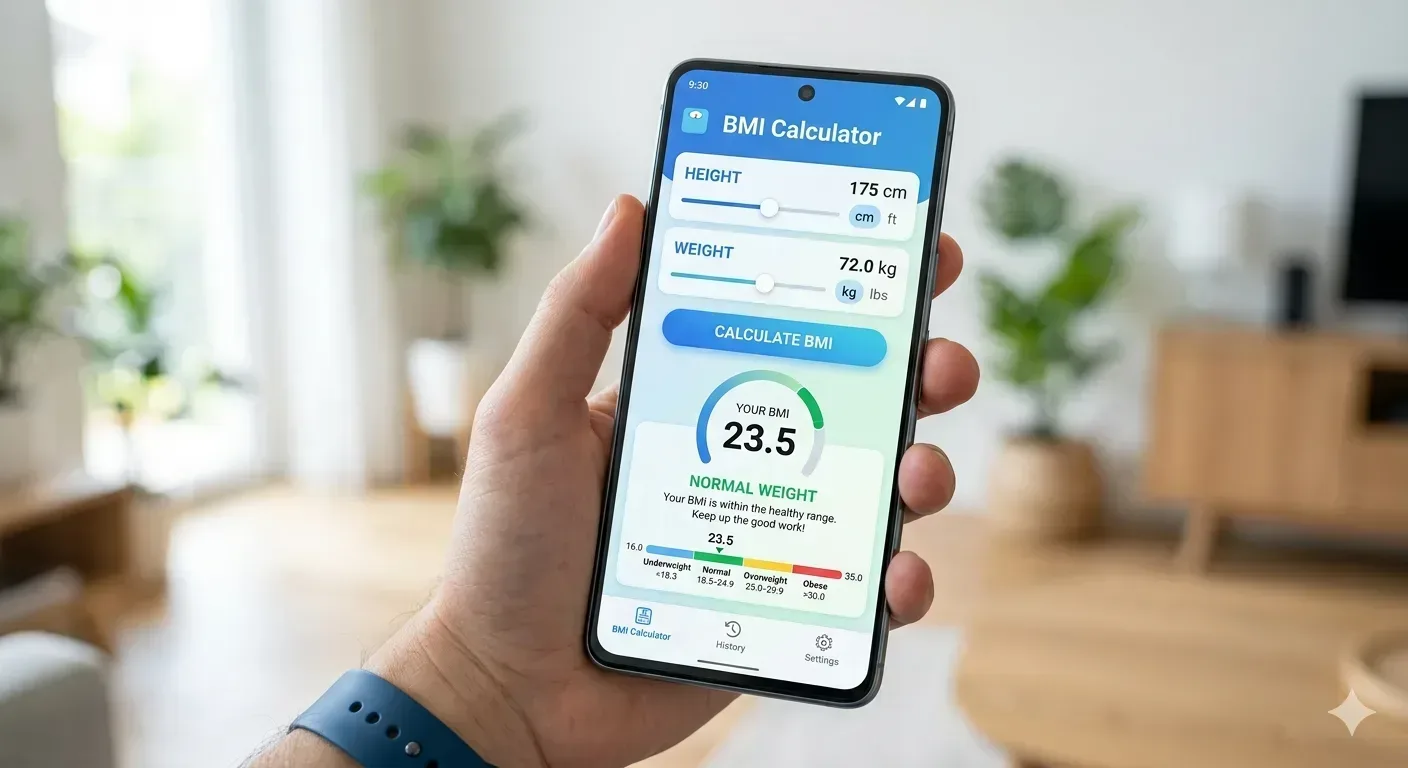
Understanding BMI Ranges and Categories
Once your BMI calculator produces a number the next step is understanding where that number places you on the standardized BMI scale. Health authorities around the world use a consistent set of ranges to classify BMI results into meaningful health categories. These ranges apply to adults aged 18 and over and are the same for both men and women.
Below 18.5 is Underweight this may indicate nutritional deficiency or an underlying condition and a healthcare provider should be consulted.
18.5 to 24.9 is Normal Weight this is associated with the lowest risk of weight elated health issues and healthy habits should be maintained.
25.0 to 29.9 is Overweight this indicates an increased risk of developing certain chronic health conditions and lifestyle adjustments are recommended.
30.0 and above is Obese this represents a significantly elevated risk of serious health complications and medical advice should be sought.
Within the obese category there are further subdivisions. A BMI between 30 and 34.9 is Class 1 obesity. Between 35 and 39.9 is Class 2 obesity.Want to understand BMI by age group? Read our BMI Calculator Age Complete Guide. And a BMI of 40 or above is Class 3 obesity sometimes referred to as severe or extreme obesity. These subdivisions help doctors assess the level of health risk more precisely and plan appropriate interventions.
Why Using a BMI Calculator Matters for Your Health
Knowing your BMI is not just about aesthetics or fitting into a clothing size. It is about understanding the real and measurable health risks that come with carrying too much or too little body weight. Research published over several decades consistently shows that both ends of the BMI spectrum being significantly underweight or significantly overweight are associated with increased mortality and morbidity.
For individuals with a high BMI the risks are particularly wel documented. Excess body fat especially when concentrated around the abdomen increases the likelihood of developing type 2 diabetes. It also raises blood pressure puts strain on the heart and increases the concentration of harmful cholesterol in the bloodstream. Over time these factors combine to significantly raise the risk of heart attacks strokes and cardiovascular disease.
On the other end of the spectrum a very low BMI can signal malnutrition bone density loss hormonal imbalances and a weakened immune system. In older adults being underweight is associated with a higher risk of fractures longer recovery times from illness and in extreme cases an increased risk of premature death.
Using a BMI calculator regularly say once every few months gives you a simple consistent measurement to track over time. It helps you catch trends early before the situation becomes medically serious.
Who Should Use a BMI Calculator
Adults Managing Chronic Conditions
People who are managing conditions such as type 2 diabetes high blood pressure or heart disease are often advised by their doctors to monitor their BMI closely. For these individuals even modest reductions in BMI can lead to significant improvements in blood sugar levels blood pressure readings and cardiovascular markers.
Individuals on a Weight Management Journey
Whether you are trying to lose weight gain weight or simply maintain your current weight a BMI calculator provides a reliable benchmark against which to measure your progress. Rather than relying solely on how you look in the mirror a BMI number gives you an objective data point rooted in scientific measurement. Learn how diet affects BMI in our Healthy Weight Loss Tips guide.
Parents and Guardians of Children
While the standard adult BMI ranges do not apply to children there are age and sex specific BMI orage percentile charts used for young people aged 2 to 19. Parents who are concerned about their child's growth and weight can use pediatric BMI tools to see where their child falls relative to other children of the same age and sex.
Fitness Professionals and Coaches
Personal trainers nutritionists and sports coaches regularly use BMI calculators as part of their initial client assessment process. BMI provides a universally understood baseline that clients can relate to and understand easily.
Healthcare Providers
Doctors nurses and other clinical staff routinely calculate BMI as part of standard health check ups. It is one of the vital statistics recorded alongside blood pressure heart rate and temperature because it provides valuable context for interpreting other health data.
The Limitations of BMI What the Calculator Cannot Tell You
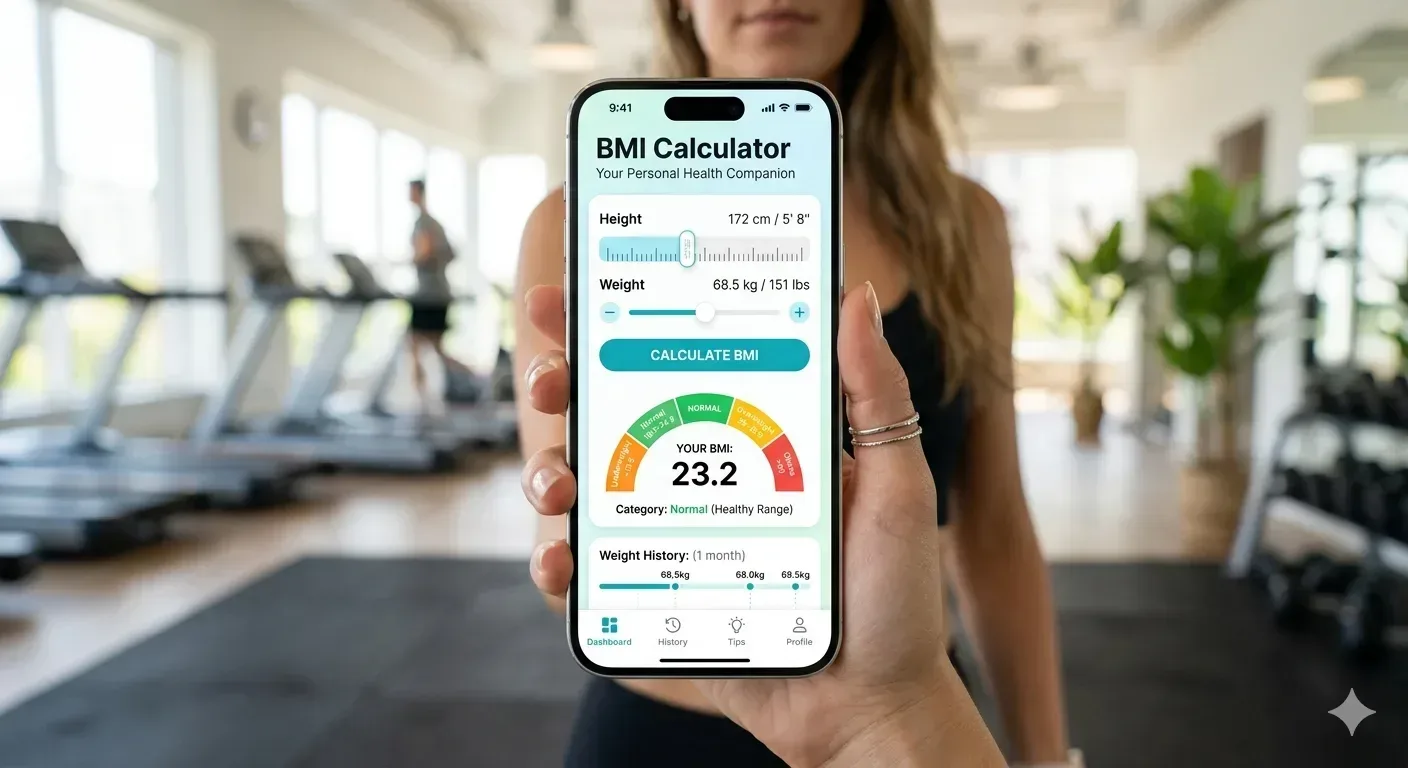
As useful as a BMI calculator is it is not a perfect tool. BMI does not directly measure body fat. It does not distinguish between fat mass and muscle mass. It does not tell you where your body fat is distributed. And it does not account for age sex ethnicity or bone density. These are real gaps that scientists researchers and doctors have debated for years.
Muscle vs Fat
The most commonly cited limitation of BMI is that it cannot tell the difference between muscle and fat. A person who is very muscular — such as a competitive athlete or bodybuilder may have a BMI in the overweight or obese range despite having very low body fat and excellent cardiovascular health.
Body Fat Distribution
Where you carry your fat matters enormously for health risk assessment. Fat stored around the abdomen known as visceral fat is much more dangerous than fat stored in the hips thighs and buttocks. Two people can have exactly the same BMI but very different waist circumferences and therefore very different health risks.
Age and Gender Differences
As people age body composition naturally changes. Older adults tend to have more body fat than younger adults at the same BMI level. Additionally women typically have higher body fat percentages than men at the same BMI level because of biological differences in fat storage patterns.
Ethnic Variations
Research has revealed that different ethnic groups develop health risks at different BMI thresholds. People of South Asian and East Asian descent tend to develop conditions like type 2 diabetes and cardiovascular disease at lower BMI levels than those of European descent. The World Health Organization has acknowledged this variation.
Complementary Health Measurements to Use Alongside BMI
Waist Circumference
Measuring the circumference of your waist at the level of your navel is one of the simplest and most powerful additional tools available. A waist measurement above 94 centimeters for men or 80 centimeters for women is associated with increased health risk regardless of BMI.
Waist to Height Ratio
Your waist circumference should be less than half your height. So a person who is 170 centimeters tall should aim to have a waist circumference below 85 centimeters. Studies have found this ratio to be a better predictor of cardiometabolic risk than BMI alone in certain populations.
Body Fat Percentage
A healthy range for adult men is between 8 and 19 percent body fat while for adult women it is between 21 and 33 percent. Body fat percentage directly measures what BMI can only estimate.
Blood Pressure and Lab Tests
Regular blood pressure checks and blood tests measuring cholesterol levels blood sugar and triglycerides give clinicians and individuals real metabolic data that goes beyond weight and height. Together with BMI this data creates a far more reliable health profile.

How to Use a BMI Calculator Effectively and Responsibly
Measure your height accurately using a wall mounted tape measure or stadiometer not a rough guess or old memory
Weigh yourself at the same time each day ideally in the morning before eating and after using the bathroom
Use the same BMI calculator consistently so that measurements are comparable over time
Track your BMI at regular intervals monthly or quarterly rather than obsessing over daily fluctuations
Always interpret your BMI result in the context of your overall health history age sex ethnicity and lifestyle
Share your BMI results with your doctor or healthcare team especially if the number falls outside the normal range
Avoid using BMI as a source of shame or anxiety it is a tool for understanding not a judgment of worth
Pair BMI tracking with waist circumference measurements for a more complete picture of your body composition
BMI Across Different Life Stages and Populations
BMI in Children and Teenagers
The standard adult BMI categories do not apply to children and adolescents because they are still growing and their body composition changes significantly with age. For young people aged 2 to 19 healthcare providers use BMI for age growth charts developed by the Centers for Disease Control and Prevention. A child below the 5th percentile is underweight. Between the 5th and 85th percentile is healthy weight. Between the 85th and 95th percentile is overweight. At or above the 95th percentile is obese.
BMI in Older Adults
For adults over 65 the relationship between BMI and health outcomes is more complex. Some research suggests that a slightly higher BMI in the range of 25 to 27 may actually be protective for older adults providing reserves that help the body cope with illness surgery and the muscle loss that naturally accompanies aging. This is sometimes referred to as the obesity paradox in the scientific literature.
BMI During Pregnancy
Pregnancy naturally changes body weight and body composition dramatically so BMI measured during pregnancy does not provide meaningful information about long term weight management. Instead healthcare providers focus on gestational weight gain guidelines which recommend different amounts of weight gain depending on the person's pre pregnancy BMI.
BMI and Athletes
The BMI calculator can be particularly misleading for athletes and highly active individuals whose body weight is driven by substantial muscle mass. A professional rugby player or a strength training athlete may have a BMI well above 25 while carrying very little excess fat and maintaining exceptional cardiovascular fitness.
Practical Strategies for Improving Your BMI
Balanced Nutrition
Research consistently supports eating plenty of vegetables fruits whole grains lean proteins and healthy fats while limiting processed foods sugary beverages excessive salt and saturated fats. Focus on making gradual sustainable improvements to your daily eating patterns. Reducing your daily caloric intake by a modest amount combined with an increase in physical activity can produce meaningful weight loss over time.
Regular Physical Activity
The World Health Organization recommends at least 150 minutes of moderate intensity aerobic activity per week for adults. This is roughly 30 minutes of brisk walking five days a week an entirely achievable target for most people. In addition strength training exercises at least twice a week help build and preserve muscle mass which keeps your metabolism active.
Sleep and Stress Management
Chronic sleep deprivation consistently getting fewer than seven hours per night is associated with hormonal changes that increase appetite and promote fat storage. Similarly chronic psychological stress elevates cortisol levels which can drive abdominal fat accumulation. Addressing sleep hygiene and finding healthy ways to manage stress can support your broader efforts to reach and maintain a healthy BMI.
Read More : Age Calculator
conclusion
For individuals with a BMI in the obese range professional support can make an enormous difference. Registered dietitians clinical psychologists behavioral therapists and bariatric physicians can provide the personalized guidance and accountability needed to make lasting changes. There is no shame in seeking help in fact it is one of the most effective things a person can do to improve their health outcomes.
For adults aged 18 and over a BMI between 18.5 and 24.9 is considered healthy by the World Health Organization and most major health authorities. A BMI below 18.5 is considered underweight. A BMI between 25 and 29.9 is classified as overweight while a BMI of 30 or above falls into the obese category. These ranges are population-level guidelines and individual health assessment should always involve a qualified healthcare provider.
No BMI is not equally accurate for every individual. Its main limitation is that it measures weight relative to height without distinguishing between fat and muscle. Muscular athletes may show a high BMI despite having low body fat. Age sex and ethnicity can also affect how BMI should be interpreted. For a more accurate health assessment BMI should be combined with other measurements such as waist circumference body fat percentage and clinical blood tests.
Standard adult BMI ranges do not apply to children and teenagers because growing bodies have different proportions at different ages. For children and adolescents aged 2 to 19 pediatric healthcare providers use BMI or age growth charts that express a child's BMI as a percentile compared to other children of the same age and sex. Always consult your child's pediatrician for interpretation of their BMI-for-age result.
For most healthy adults checking BMI every three to six months is a reasonable frequency. This gives you enough time between measurements to notice meaningful changes resulting from lifestyle adjustments while still catching trends early. Checking it too frequently such as daily can lead to unnecessary anxiety since normal day to day weight fluctuations can cause your BMI number to shift even when your overall body composition is not changing.
Not necessarily. While a high BMI is statistically associated with increased risk of various health conditions it does not guarantee that any individual is unhealthy. Some people with high BMI values particularly those who are very physically active and have high muscle mass may have excellent cardiovascular fitness normal blood pressure and healthy cholesterol levels. Conversely some people with a normal BMI can still have hidden health risks. This is why BMI should always be interpreted in combination with other health assessments.
BMI is an indirect estimate of body composition calculated purely from height and weight. Body fat percentage is a direct measurement of how much of your total body weight is composed of fat tissue. Body fat percentage gives more nuanced and accurate information because it distinguishes between fat mass and lean mass. However measuring body fat percentage accurately requires specialized equipment which is not as easily accessible as a simple BMI calculator.
Yes even modest weight loss can produce meaningful improvements in both BMI and overall health. Research shows that losing just 5 to 10 percent of your total body weight can lead to significant reductions in blood pressure improved blood sugar control lower cholesterol levels and reduced joint stress. These improvements are often visible in lab test results long before a person reaches their goal BMI. Every step toward a healthier BMI counts.
The standard BMI classification ranges underweight normal weight overweight and obese are the same for both adult men and women in most international health guidelines. However women typically have higher body fat percentages than men at the same BMI level due to biological differences in how fat is stored and distributed. Some researchers have proposed sex-specific BMI cutoffs but these have not yet been universally adopted in clinical practice.
If your BMI result falls outside the 18.5 to 24.9 healthy range the most important first step is to consult your doctor or a qualified healthcare provider. They can help you understand what your result means in the context of your full health picture and create a personalized plan that addresses your specific situation. If you are underweight they may recommend nutritional support. If you are overweight or obese they may recommend dietary changes increased physical activity and behavioral support. Remember your BMI result is a starting point for conversation not a final verdict on your health.
The child and teen BMI calculator is fundamentally different from the adult version in that it uses percentile-based classification rather than fixed numeric categories. Because children's body composition changes significantly as they grow, the CDC child BMI calculator compares a child's BMI to others of the same age and sex using growth reference data. A child in the 85th percentile is considered overweight, and one at or above the 95th percentile is considered obese — regardless of the actual BMI number.