What Happens If You Ignore a PC Bottleneck? Risks, Fixes & More
What Happens If You Ignore a PC Bottleneck?
You just built your dream PC. The RGB is glowing, the fans are spinning, and then stutter. Lag. Frustration. If your system is underperforming despite expensive components, a bottleneck is probably the culprit. But what actually happens if you simply ignore it? The answer might surprise you and it goes far beyond just poor frame rates.
In this guide, we break down exactly what a PC bottleneck is, what ignoring one does to your hardware and your experience, and what steps you can take to resolve it before things get worse.
What Is a PC Bottleneck?
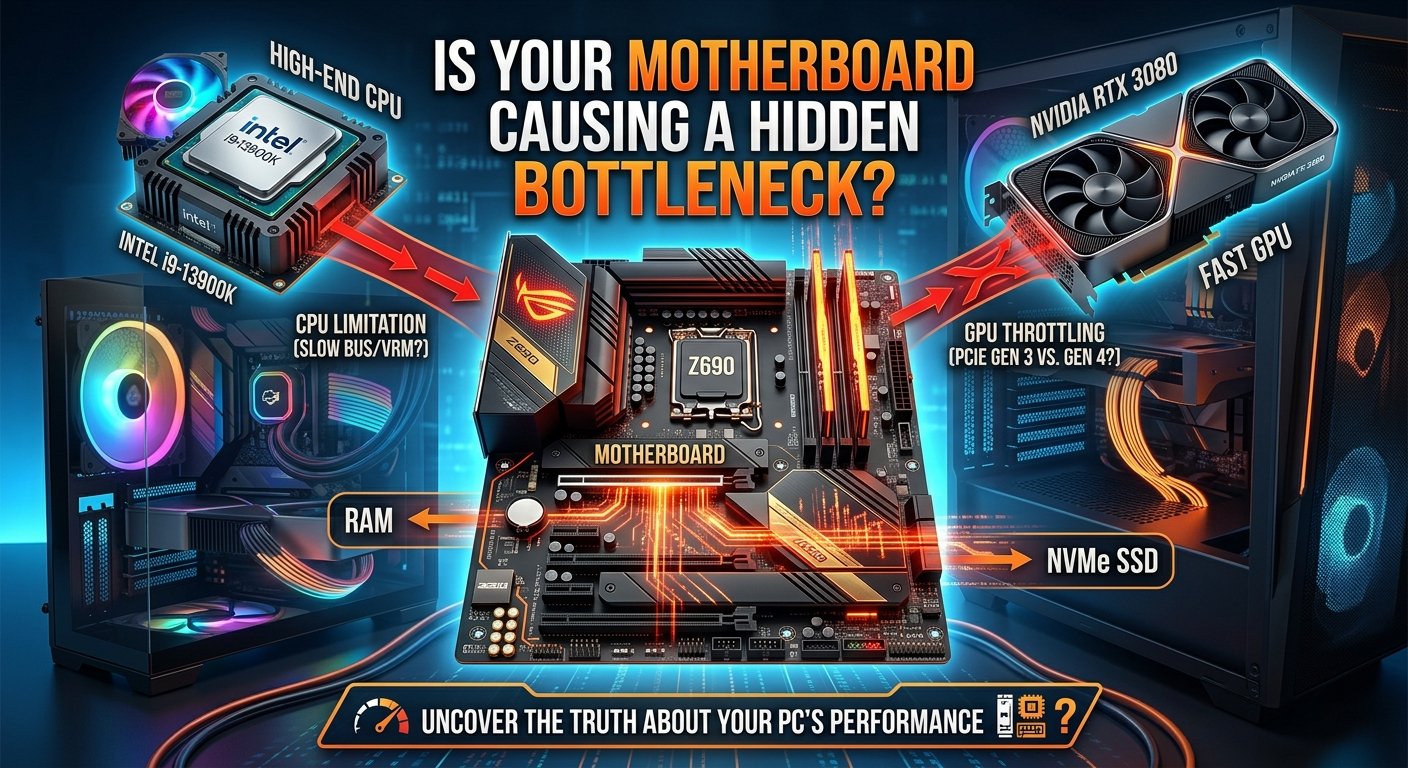
A PC bottleneck occurs when one component in your system is significantly slower or weaker than another, causing it to restrict the full potential of the more powerful part. Think of it like a highway where a two-lane road merges into one no matter how fast the cars are moving before the merge, everything slows down at that chokepoint.
The most common bottleneck pairings in a PC include:
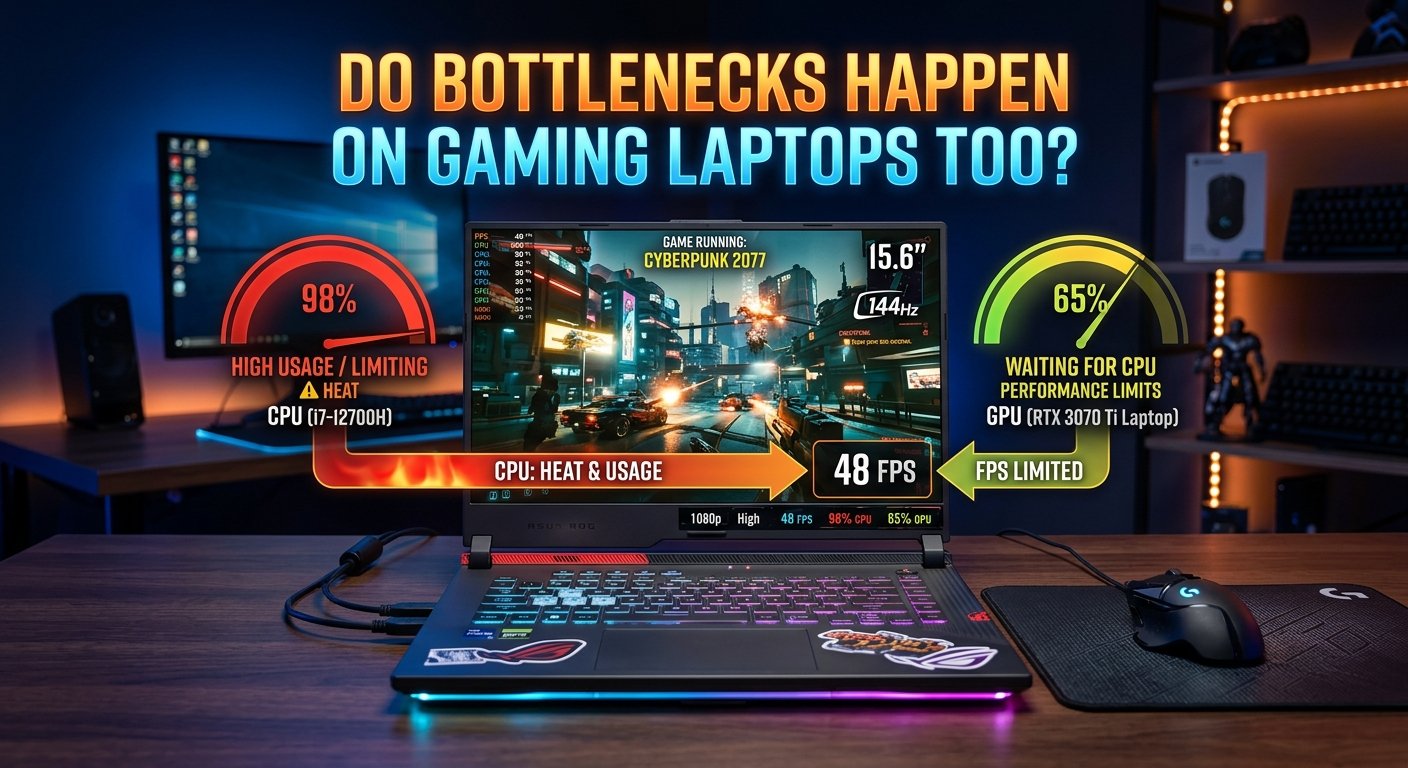
• CPU bottleneck: Your processor cannot feed data to the GPU fast enough, causing the graphics card to sit idle waiting for instructions.
• GPU bottleneck: Your graphics card cannot keep up with the frame data the CPU is producing less common in gaming setups.
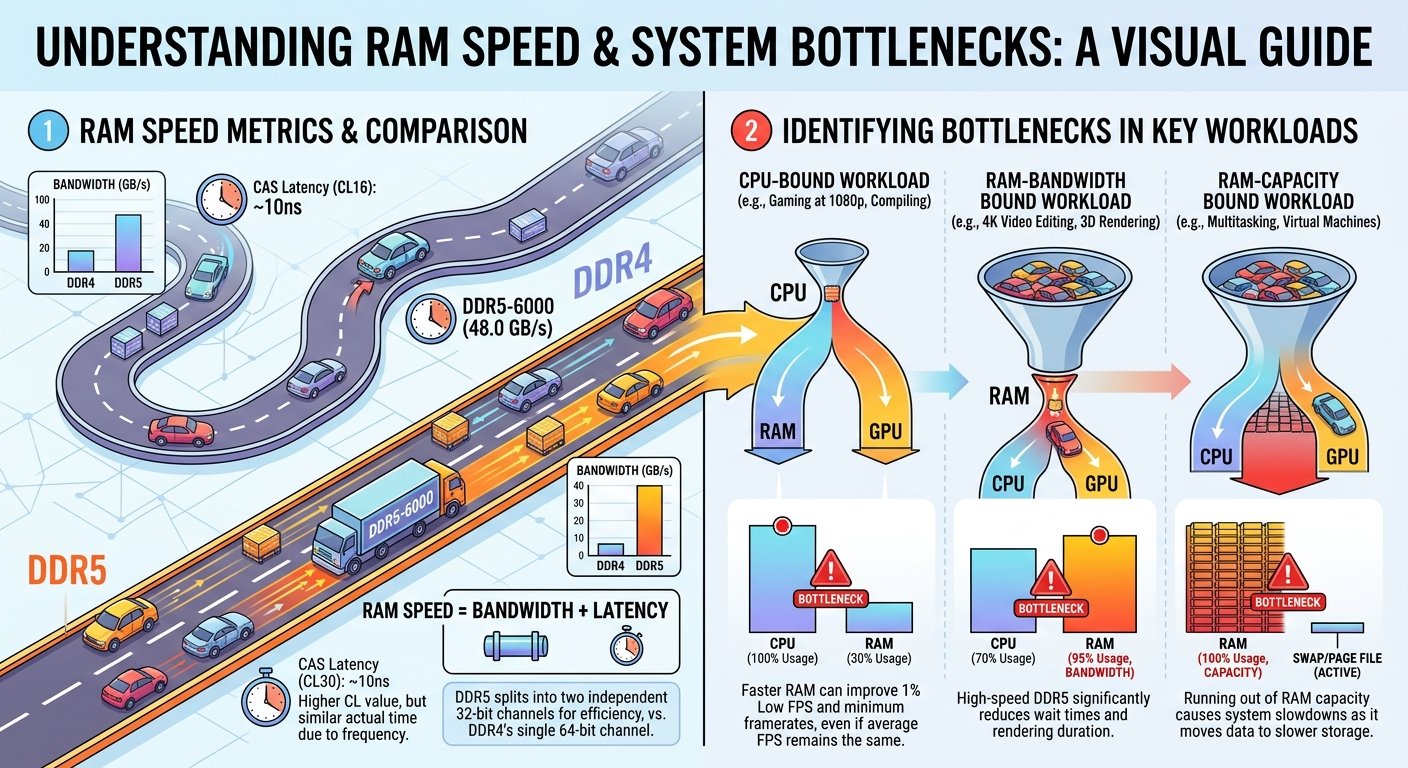
• RAM bottleneck: Insufficient or slow memory forces the CPU to wait for data, throttling overall system throughput.
• Storage bottleneck: A slow HDD or SATA SSD can limit load times and game streaming speeds in modern titles.
Bottlenecks are often measured as a percentage — a 20% bottleneck means one component is leaving roughly 20% of another's potential performance on the table. Some bottleneck is normal and unavoidable; a severe one, however, is a problem that demands attention.
The Real Consequences of Ignoring a PC Bottleneck
Persistent Performance Problems
The most immediate and visible effect of a bottleneck is inconsistent, poor performance. Gamers will notice stuttering, frame drops, and input lag even in titles that should run smoothly on their hardware. Content creators will see rendering times balloon unnecessarily. Streamers may experience dropped frames, buffering, and encoding errors.
What makes this particularly frustrating is that upgrading only one component say, dropping in a powerful new GPU will produce almost no improvement if the CPU is the bottleneck. You end up paying for performance gains you cannot actually use.
- What Is a PC Bottleneck?
- The Real Consequences of Ignoring a PC Bottleneck
- Persistent Performance Problems
- 2. Wasted Hardware Potential
- Excessive Heat and Component Stress
- System Instability and Crashes
- Reduced Component Lifespan
- Poor User Experience and Productivity Loss
- Noise and Energy Waste
- How to Identify Your Bottleneck
- How to Fix a PC Bottleneck
- Conclusion: Do Not Let a Bottleneck Go Unaddressed
2. Wasted Hardware Potential
When a bottleneck goes unaddressed, expensive hardware sits underutilized. A high-end GPU running at 40-50% utilization while a dated CPU maxes out at 100% is pure waste. You are paying for power you cannot access. Over time, this represents a significant financial loss especially if you continue to upgrade the wrong component in an attempt to fix performance issues.
Many users unknowingly fall into this trap: buying more RAM when they actually have a GPU bottleneck, or upgrading a graphics card when the CPU is the real problem. Identifying the bottleneck correctly is the first step toward making smart hardware investments.
Excessive Heat and Component Stress
A bottlenecked component typically the CPU or GPU that runs at 99-100% utilization for extended periods generates significant heat. Modern chips are designed to handle sustained load, but thermal stress compounds over time. When a CPU is constantly maxed out because it cannot keep pace with the GPU (or vice versa), cooling systems work harder, temperatures rise, and thermal throttling may kick in reducing performance even further.
In the long run, sustained high temperatures can degrade thermal paste, accelerate wear on cooling fans, and in extreme cases shorten the lifespan of the component itself. What starts as a performance issue can quietly become a hardware reliability issue.
System Instability and Crashes
Overworked components under sustained thermal and electrical stress are more prone to instability. A CPU running at full load for hours during gaming sessions may trigger system crashes, blue screens, or unexpected shutdowns especially if the cooling solution is marginal. Ignoring a bottleneck does not just cost you performance; it puts system stability at risk.
These crashes can occasionally lead to data corruption, unsaved work being lost, or file system errors particularly if the crash occurs during a write operation to your storage drive.
Reduced Component Lifespan
Electronic components degrade over time under workload and heat. A CPU that runs at 95-100% utilization daily due to a GPU bottleneck (where the GPU is powerful enough to constantly demand that level of CPU throughput) will accumulate more wear than one running at a healthy 60-70% average.
While modern CPUs are rated for thousands of hours of operation, chronic overloading under inadequate cooling can push them to failure sooner than expected. This is a slow-burn consequence that most users do not notice until something breaks.
Poor User Experience and Productivity Loss
Beyond raw hardware consequences, a bottleneck degrades your overall experience. For gamers, it means competitive disadvantages due to frame rate instability and input lag. For professionals using video editing software, 3D rendering tools, or AI-based applications, bottlenecks translate directly into longer render times, slower previews, and lost productivity.
If your workflow depends on your PC, ignoring a bottleneck is not just an annoyance it has a measurable cost to your time and output.
Noise and Energy Waste
A component pushed to its limit runs fans at full speed to compensate for the heat it generates. This creates more noise an often-overlooked quality-of-life issue for content creators recording audio or anyone working in a noise-sensitive environment. Additionally, a system burning 100% CPU capacity continuously consumes more electricity, increasing power costs over time.
How to Identify Your Bottleneck
Before you can fix a bottleneck, you need to locate it. Here are the most reliable methods:
• Monitor utilization in real time: Use tools like MSI Afterburner, HWiNFO64, or Task Manager to track CPU and GPU usage while gaming or under load. If one component is at 99% while the other hovers at 50%, you have found your bottleneck.
• Use bottleneck calculators: Websites like PC-Builds.com offer bottleneck calculators where you input your CPU and GPU model to get an estimated bottleneck percentage.
• Check frame time data: Tools like CapFrameX or FRTC can reveal frame time inconsistencies caused by CPU-GPU synchronization issues.
• Test at different resolutions: A CPU bottleneck often becomes less severe at higher resolutions (4K) because the GPU has more work to do. If performance improves drastically when bumping from 1080p to 1440p, your CPU is likely the limiting factor.
How to Fix a PC Bottleneck
Once identified, there are several approaches to resolving a bottleneck:
• Upgrade the limiting component: The most direct fix if your CPU is the bottleneck, upgrade to a faster processor on a compatible socket. If RAM is the issue, add more sticks or switch to faster memory.
• Adjust in-game settings: If a GPU bottleneck exists, increase resolution or graphics settings to push the GPU harder, balancing the load between components.
• Overclock responsibly: If your CPU has overclocking headroom, a modest OC can close a performance gap without requiring a full hardware replacement.
• Enable GPU scaling and frame generation: Modern technologies like NVIDIA DLSS 3 Frame Generation and AMD Fluid Motion Frames can help GPU-limited systems produce smoother output.
• Optimize background processes: Free up CPU cycles by disabling unnecessary startup programs, background apps, and system services.
In some cases particularly when the bottleneck is severe the most cost-effective solution is a full platform upgrade. Pairing a current-generation mid-range CPU with a high-end GPU from three generations ago is almost always more balanced and cost-efficient than mismatching top-tier components across different eras.
Conclusion: Do Not Let a Bottleneck Go Unaddressed
A PC bottleneck is not just a minor inconvenience it is a systemic inefficiency that costs you performance, hardware health, money, and time. Ignoring it means accepting diminished returns on your hardware investment, increased thermal wear, potential instability, and a degraded experience every time you sit down at your desk.
The good news is that bottlenecks are diagnosable and fixable. Armed with the right monitoring tools and a clear understanding of your system, you can make targeted upgrades that genuinely improve performance instead of throwing money at components that do not address the real problem.
Your PC is an ecosystem. Every component needs to work in harmony. When one link in the chain breaks down, everything suffers. Identify it, fix it, and unlock the performance you already paid for.