Ryzen 7 7800X3D + RTX 4090: Is This the Perfect Gaming Combo?
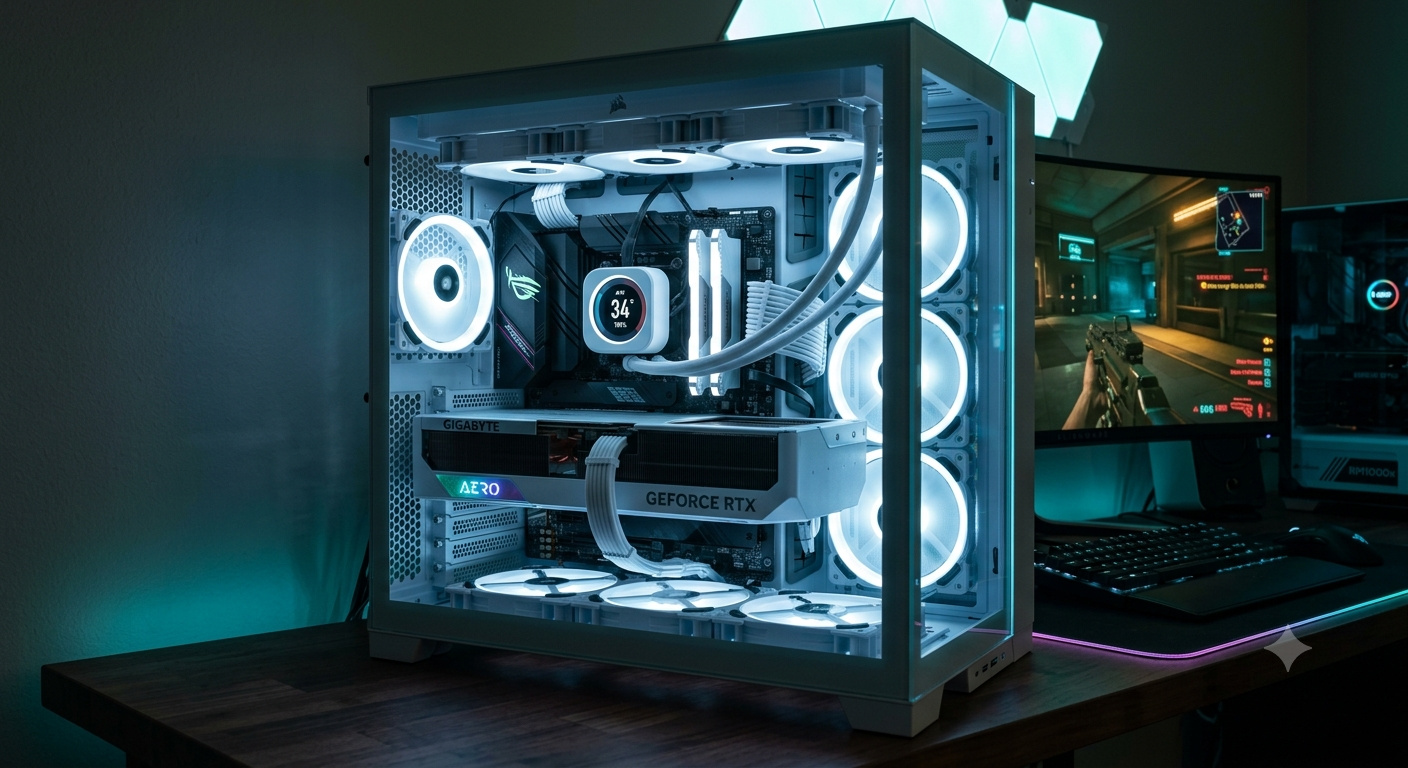
The Ryzen 7 7800X3D paired with the RTX 4090 is widely regarded as the best pure gaming combination available in 2026 and the bottleneck data supports that reputation. At 1440p and 4K, this pairing produces one of the smallest CPU bottleneck percentages achievable with the RTX 4090. At 1080p, even the 7800X3D shows a small but measurable CPU bottleneck with the 4090 because the RTX 4090 is fast enough to expose limitations in every current consumer CPU at that resolution.
Check the exact bottleneck percentage for this combination at your gaming resolution in the bottleneck calculator the result varies meaningfully between 1080p, 1440p, and 4K.
Why the Ryzen 7 7800X3D Is the Top CPU for Gaming
The Ryzen 7 7800X3D uses AMD's 3D V-Cache technology to stack 64MB of additional L3 cache on top of the processor's base die, resulting in 96MB total L3 cache. This dramatically reduces how often the CPU needs to reach out to slower system RAM for game data, keeping instructions flowing to the GPU at a faster, more consistent rate.
The practical result: in gaming workloads specifically, the 7800X3D consistently outperforms CPUs that have higher base clock speeds, more cores, and significantly higher price tags including the Ryzen 9 7950X3D in some gaming scenarios, and the Intel Core i9-14900KS in most.
This cache advantage is most pronounced at 1080p where the GPU renders frames so quickly that the CPU's instruction supply rate becomes the primary bottleneck. At 1440p the advantage narrows but remains measurable. At 4K it's negligible because the GPU is overwhelmingly dominant.
Bottleneck Data: Ryzen 7 7800X3D + RTX 4090
| Resolution | Estimated CPU Bottleneck | GPU Usage Pattern | Notes |
|---|---|---|---|
| 1080p | ~8–14% (lowest achievable with any current consumer CPU) | GPU below 90% in CPU-heavy games | Even the 7800X3D can't fully keep up at 1080p in demanding titles |
| 1440p | ~3–8% | GPU near 95–100% | Near-perfect pairing; among the best achievable at 1440p |
| 4K | Under 3% | GPU at ~100% | Essentially bottleneck-free; GPU dominates entirely |
The key insight: the Ryzen 7 7800X3D produces the smallest CPU bottleneck of any current consumer CPU with the RTX 4090 at 1080p and 1440p — but it doesn't eliminate it entirely. That's not a criticism of the 7800X3D; it's a reflection of how fast the RTX 4090 is.
The One Scenario Where This Combo Isn't Perfect
At 1080p in the most CPU-intensive genres (real-time strategy with hundreds of units, certain simulation games, open-world titles with extreme NPC density), even the 7800X3D + RTX 4090 will show some CPU limitation. The GPU is being held back slightly not because the 7800X3D is weak, but because no current consumer CPU can fully eliminate the bottleneck with the RTX 4090 at 1080p in every genre.
- Why the Ryzen 7 7800X3D Is the Top CPU for Gaming
- Bottleneck Data: Ryzen 7 7800X3D + RTX 4090
- The One Scenario Where This Combo Isn't Perfect
- How Does the 7800X3D Compare to Other CPUs With the RTX 4090?
- Is the 7800X3D Worth Buying For an RTX 4090 Build in 2026?
- What About Multi-Threaded Workloads?
- System Requirements for Ryzen 7 7800X3D + RTX 4090
- Key Takeaways
If 1080p gaming is your primary use case with this combination, managing expectations is important: the 7800X3D minimises the bottleneck, but it doesn't make it disappear. A 1440p or 4K monitor fully unlocks what this pairing can deliver.
How Does the 7800X3D Compare to Other CPUs With the RTX 4090?
| CPU | 1080p Bottleneck | 1440p Bottleneck | Relative Cost |
|---|---|---|---|
| Ryzen 7 7800X3D | ~8–14% (best) | ~3–8% (best) | Mid-High |
| Ryzen 9 7950X3D | ~9–15% | ~4–9% | Higher |
| Core i9-14900K | ~10–18% | ~5–12% | Higher |
| Core i7-14700K | ~12–20% | ~7–14% | Similar |
| Ryzen 9 7900X3D | ~9–16% | ~5–10% | Similar |
| Core i5-13600K | ~18–26% | ~10–18% | Lower |
The Ryzen 7 7800X3D delivers the smallest bottleneck at a mid-high price point providing better gaming results than processors that cost significantly more. This is exactly why the gaming community has converged on it as the top CPU recommendation for RTX 4090 builds.
Is the 7800X3D Worth Buying For an RTX 4090 Build in 2026?
Yes, with one consideration: the Ryzen 7 7800X3D is now a previous-generation release on AM5, and AMD has since launched updated 3D V-Cache CPUs. Check whether a newer X3D variant is available in your market and compare both against the RTX 4090 in the Compare Systems tool before buying.
For the RTX 4090, the 7800X3D remains the best price-to-gaming-performance ratio available it costs less than the i9-14900K while consistently outperforming it in gaming workloads at 1080p and 1440p.
What About Multi-Threaded Workloads?
The Ryzen 7 7800X3D has 8 cores impressive for gaming but not a workstation-class chip. If you also use your system for video rendering, 3D animation, software compilation, or large-scale simulations, the 7800X3D is not the optimal pick:
- Ryzen 9 7950X3D Combines 16 cores with 3D V-Cache; the better choice if professional workloads are equally important
- Core i9-14900K More cores (24 total) with better multi-threaded throughput than the 7800X3D, though at a gaming performance disadvantage
For pure gaming with the RTX 4090, the 7800X3D wins. For mixed professional and gaming use, the 7950X3D is the more complete solution despite its higher cost.
System Requirements for Ryzen 7 7800X3D + RTX 4090
- Motherboard: AMD AM5 socket, B650E or X670E chipset for PCIe 5.0 support
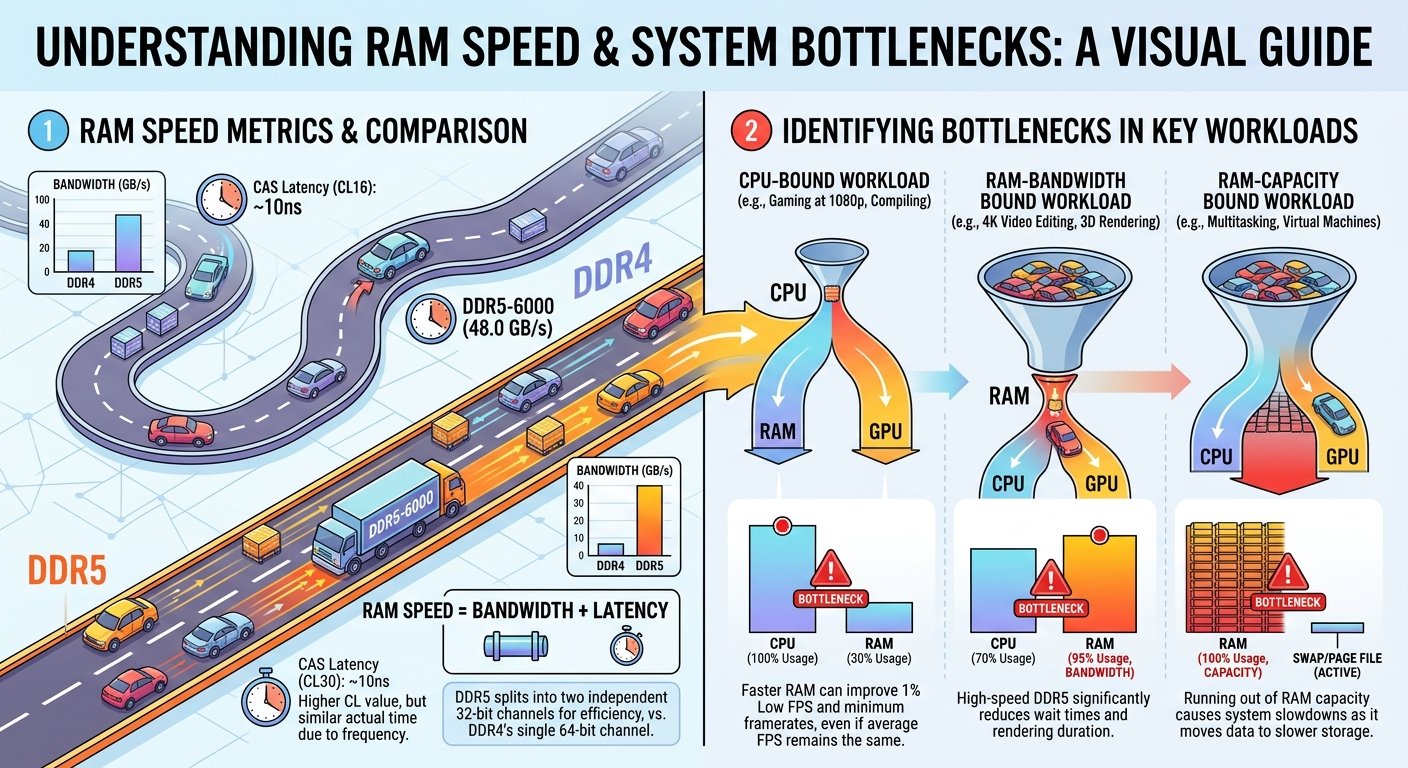
- RAM: DDR5 at 6000MHz with EXPO enabled the 7800X3D's performance is meaningfully sensitive to memory speed; don't undercut the CPU by running slow DDR5
- PSU: 1000W minimum for a stable RTX 4090 build; 1200W recommended for overclocked configurations
- Storage: PCIe 4.0 NVMe SSD eliminates storage as a variable in an otherwise top-tier build
Key Takeaways
- The Ryzen 7 7800X3D + RTX 4090 produces the smallest CPU bottleneck of any current consumer pairing at 1080p and 1440p, making it the closest thing to a "perfect" gaming combo available.
- At 1080p, even this pairing shows a small (8–14%) CPU bottleneck in the most CPU-intensive titles the RTX 4090 is simply faster than any current consumer CPU can fully feed at that resolution.
- At 1440p (~3–8%) and 4K (under 3%), the combination is essentially bottleneck-free.
- The 7800X3D wins because of its 96MB L3 cache, not core count it often outperforms more expensive chips with more cores in gaming workloads.
- DDR5 at 6000MHz with EXPO enabled is essential running slower RAM reduces the 7800X3D's advantage and increases the bottleneck.
- Confirm the exact percentage at your resolution in the bottleneck calculator.